By the University Staff Association (USA) Communications Committee
USA members in University Health Services (UHS) are enjoying a hard-fought victory against arbitrary decision making by university management.
In early September, just before the start of the fall semester, USA President Sheila Gilmour signed a settlement agreement with the University related to an Unfair Labor Practice (ULP) charge filed with the Department of Labor Relations (DLR), the first of two active charges stemming from a long fight against retaliatory practices and arbitrary decision making by UHS management.
Because USA members knew their rights and had the courage to continue this fight, they now have two days per week of flex work guidance in writing, they stood tall against arbitrary revocation, and the voices of UHS members have gotten that much stronger. USA’s Grievance Committee now has experience with ULPs, which makes us stronger in the long run, and USA has established a foothold in UHS for union presence.
How did USA get here?
The saga started with an arbitrary decision to revoke flexible work arrangements in UHS. In July of 2025, UHS members alerted incoming USA leadership to a communication by management stating that their flexible work arrangements were being rescinded without rationale. These USA members were told that permanent in-office furniture arrangements were being finalized, and the only reason for this change was that “every student-facing position needs to be in the office now.”
Except, that’s not how labor agreements work.
It was the first challenge for USA’s new incoming Grievance Committee, a team comprised of the President, Vice President, Grievance Officer, Chief Steward and Co-Chief Steward. Ian Sedelow and Kyle Chambers, the new incoming Grievance Officer and Vice President, respectively, filed a grievance and launched an investigation, trying to understand what was happening.
The investigation yielded some troubling details: that the furniture arrangements for the new fully on-site office space were overly cramped, resulting in serious questions not only relating to a comfortable working environment, but to the compliance of HIPAA protection policy. Staff in the area reported not being able to have phone conversations without needing to speak loudly over one another. During the Step I grievance hearing, management representatives were stumped when asked if the furniture arrangements had been made with Health Insurance Portability and Accountability Act (HIPAA) regulations in mind.
The rationale for the change, as explained in USA’s Step 2 Grievance Hearing, was that the Executive Director of UHS, Andrew McMahon, has a strategic vision of UHS offices being a “one-stop shop” for students and community members who have questions or issues related to the administrative side of the health care they receive, and to be able to compete with other medical clinics in Western Mass. However, reviewing the data on in-person visit numbers showed nothing close to a legitimate business need for pivoting to fully in-person service and violating the Flexible Work Guidelines.
At each step of the grievance process, USA believed their point was received by management. Management promised a resolution each time, often taking several weeks of time to keep USA members in limbo, before just denying the grievance outright. Instead of trying to find a solution through mutual cooperation, management grew less and less responsive to requests for updates and information while misrepresenting the facts at grievance hearings. As a result, prior to receiving the Step 3 grievance determination, USA filed a charge of prohibited practice (commonly referred to as an unfair labor practice, or ULP) with the DLR.
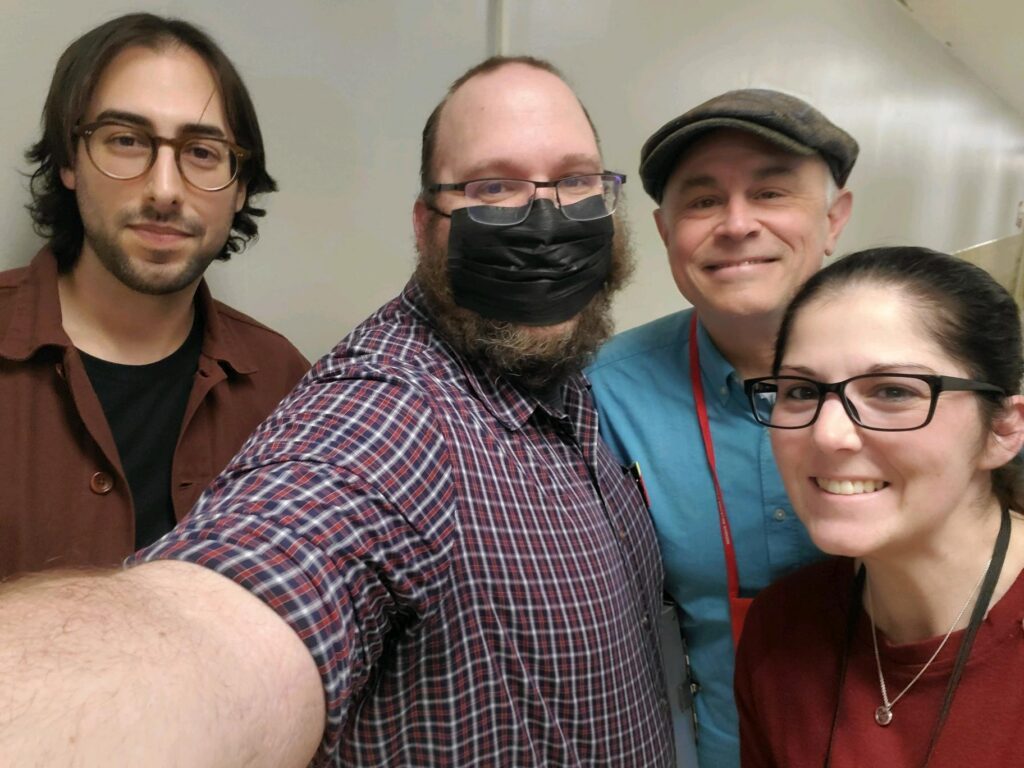
Meanwhile, this issue in a small area of UHS was a warning sign that treatment of our coworkers in this manner isn’t an isolated matter. Eager to find out how deep the rabbit hole goes, a small team of USA members engaged in a lunchtime walkthrough of UHS common areas to hand out union cards with Weingarten Rights and contact information. The intent was to be “maximally visible with minimal disruption,” staying out of clearly prohibited locations like patient areas and laboratories. The team’s quick conversations with USA members in UHS showcased a pattern of issues with morale and decision making structures across the department.
Management’s response to the walkthrough was coercive and retaliatory, even going so far as to threaten those involved with disciplinary action. Management attempted to classify the walkthrough as a “moderate breach of HIPAA,” which, if you’ve been keeping score while reading this article, you’d recall that HIPAA compliance was one of the arguments against the revocation of FWAs in the first place. (Fun fact: if you’ve been through UHS lately and have seen more access signs posted on doors and walls, this was part of management’s response to the walkthrough.) As walkthroughs of this nature are a concerted, protected activity under MGL Chapter 150E, and management was trying to enforce unreasonable restrictions on employees, USA filed their second ULP charge. A DLR hearing officer found that probable cause existed to establish that UHS management violated state labor law, and issued a complaint against the University. A full hearing is scheduled for September of 2027.
What You Should Take Away From This
This story is an example of how stacked the system is against you and your coworkers, even when the law and contract language specifically support you. That doesn’t mean throw your hands up and resign yourself to management whims just because they’re in charge. Rather, the wins in this case came because coworkers in an office stood together to hold management accountable, and how important growing the power of your local union is to safeguarding your rights.